

Your Professional Microemulsion Supplier
Our goal is to become your true partner in the field of microemulsion in China. SINVOCHEM is a chemical company specializing in formulation aids and adjuvants for agrochemical applications. With sustainable innovation and timely technical support strategy, SINVOCHEM has gained good reputation as main supplier for formulators in China. Backed by a high-efficient R&D team and well-constructed lab platform, SINVOCHEM succeeds in setting customized services as priority. Our company is committed to applying advanced manufacturing technology and strict quality control standards to every product. The price is competitive and the product is quality-assured, which is a good choice for your long-term cooperation.
-

Emulsifier SP-ME006
(Universal Emulsifier for ME)SP-ME006 is an an-nonionic compound with high versatility to most ME formulations. It enables formulation maintain transparent in wide temperature range from -10°C to Add to Inquiry -
Emulsifier SP-ME005E
This product is a precisely engineered non-ionic surfactant complex, specifically developed for low-concentration pyrethroid microemulsions, such lambda cyhalothrin mix emamectin benzoate. Add to Inquiry -
Emulsifier SP-MR45
Emulsifier SP-MR45 is a microemulsion adjuvant. This non-ionic surfactant complex is designed with advanced molecular engineering to ensure exceptional emulsification and dispersion performance. Add to Inquiry
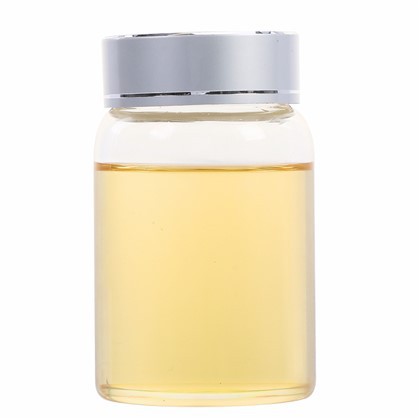


Advantages of Microemulsion
01.
Ideal for low-concentration microemulsions
Such lambda cyhalothrin mix emamectin benzoate.
02.
Low dosage, high emulsification
Reduces pesticide usage while maintaining strong emulsification.
03.
Enhances pesticide efficacy
Improves stability, reduces residue, and boosts effectiveness.
04.
Eco-friendly and economical
Lower additive usage reduces environmental impact and operational costs.
Specification of Microemulsion
|
Item |
Stanards |
|
Appearance (25°C) |
Yellow viscous liquid |
|
Odor |
Odorless |
|
PH (1% aqueous solution, 25°C) |
6.9 |
|
Solubility |
Soluble in water |
|
Solubility in Oil |
Soluble in most acute or non-polar solvents |
Features of Microemulsion
It is a microemulsion adjuvant. This non-ionic surfactant complex is designed with advanced molecular engineering to ensure exceptional emulsification and dispersion performance. Its unique molecular structure allows it to maintain stable emulsification across a wide transparent temperature range, which is crucial for microemulsion formulations of agrochemical products.
Applicatin of Microemulsion
Recent interest in microemulsion systems has resulted from their utility in a broad range of applications including enhanced oil recovery, consu- mer and pharmaceutical formulations, nanoparticle synthesis, and chemical reaction media. In food industry, microemulsion promotes solubilization of insoluble nutrients in non-polar solvent. It also finds application in polymerization and chemical reactions as media and vehicles, by introducing reactants in nanosized water droplets.
Types of Microemulsion
Emulsifier SP-ME005E: This product is a precisely engineered non-ionic surfactant complex, specifically developed for low-concentration pyrethroid microemulsions, such lambda cyhalothrin mix emamectin benzoate.
Emulsifier SP-MR45: Emulsifier SP-MR45 is a microemulsion adjuvant. This non-ionic surfactant complex is designed with advanced molecular engineering to ensure exceptional emulsification and dispersion performance.

Production Method of Microemulsion
In carrying out this method, microemulsions are prepared in a four-step process: A surfactant is selected which is just barely soluble in the oil phase. The surfactant thus selected is dissolved in the oil to be emulsified in an amount effective to yield a fine emulsion of the emulsified oil in an aqueous phase. The oil, together with its dissolved surfactant, is added to the water phase and shaken or stirred. There is provided a second surfactant in the water phase which is somewhat more soluble in water than the first surfactant to produce a substantially clear microemulsion of oil in water.
Packaging and Shipping of Microemulsion
|
Packing |
Drum |
|
Shipping |
Shipped by road, sea, rail or air |
FAQ
We're professional microemulsion manufacturers and suppliers in China, specialized in providing high quality formulation aids and adjuvants. Please rest assured to buy microemulsion at competitive price from our factory.
